
Can Peptides Help with Hair Loss? What Chara Health Recommends
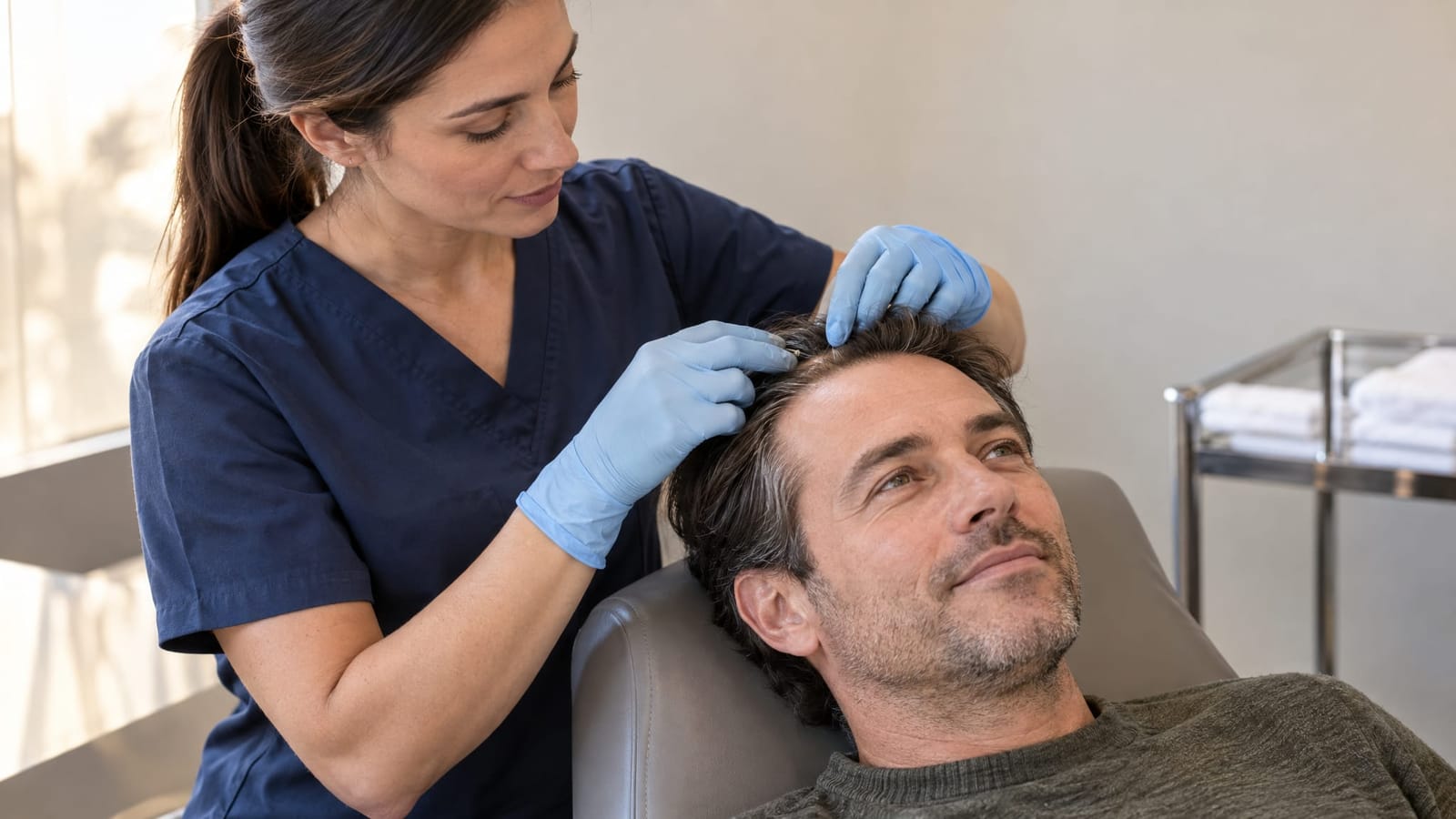
Peptide-containing products may help condition existing hair or improve its appearance, but they are not a proven stand-alone way to regrow lost hair. The important distinction is whether a product improves the strands already present or produces a measurable change in hair growth. Those are different outcomes.
For anyone considering peptides within a broader longevity and wellness plan, the starting point is the goal: less breakage, reduced shedding, or increased density. That goal helps determine whether a topical product, supplement, or clinician-directed discussion is relevant.
First, Define What “Helping Hair” Means
Hair-product advertising often groups several benefits under “hair growth.” Separating them makes claims easier to evaluate:
- Less breakage: Existing strands remain intact, which may make hair look fuller without increasing the number of hairs growing.
- Improved appearance: Hair feels smoother or looks thicker without a change in follicle activity.
- Reduced shedding: Fewer hairs are released from follicles. This is different from preventing strands from breaking.
- New growth: A measurable change in hair growth, rather than better-looking existing hair.
The distinction between supportive hair care and regrowth is also addressed in L’Oréal Paris’s consumer guide. A claim about softness or fullness does not answer whether a product increases hair density.
Option 1: Topical Peptide Products
Topical peptide products include formulas applied to the hair or scalp. A formula intended to condition the hair fiber serves a different purpose from one claiming to influence the follicle. The presence of peptides alone does not tell you which outcome to expect.
Product instructions and the exact claim matter. A rinse-out conditioner promising smoother strands is making a different claim from a leave-on scalp serum promising greater density. Evidence for an ingredient in one formulation cannot automatically be applied to another product.
Where copper peptides fit
Copper peptides are discussed in connection with biological signaling around hair follicles, including the proposed mechanisms described in Rejuvence Clinic’s overview. A proposed biological mechanism is different from a demonstrated improvement in hair growth among people using a finished product.
Useful questions for evaluating a product claim include:
- Was the finished formula studied, or only a related ingredient?
- Did the evaluation measure hair counts, breakage, or participants’ impressions?
- Was there a comparison group?
- Were adverse effects and limitations reported?
Tradeoff: A topical product may fit a hair-care routine, but improved texture or fullness is not evidence that it has addressed the reason for hair loss.
Option 2: Oral Peptide Supplements
Oral products are often marketed as supporting hair “from within,” including the ingestible approach discussed in OMI Wellbeauty’s article. That phrase does not explain what was measured or whether a product produced new growth.
For an oral formula, useful details include who participated in its evaluation, whether there was a comparison group, and whether participants used other hair products at the same time. Findings for one proprietary formula do not automatically apply to all peptide supplements.
Oral and topical products also involve different considerations. An oral product adds ingredients to an existing supplement and medication routine; a topical product requires attention to its formulation and how the scalp responds. Neither format is inherently the better choice simply because it contains peptides.
Tradeoff: Convenience is separate from effectiveness and suitability. Ingredient overlap, medications, and whether nutritional assessment is relevant are useful topics for an individual medical evaluation.
Option 3: Peptides Alongside Clinician-Directed Care
A peptide product is not a substitute for understanding the cause of hair changes. An evaluation can help distinguish breakage, increased shedding, a changing hairline, and scalp concerns. That distinction gives product selection a purpose beyond choosing an appealing ingredient.
For example, someone whose hair looks thinner because strands are breaking may value a conditioning benefit. Someone noticing progressive loss of density is asking a different question. The same “fuller hair” label does not answer both concerns.
At Chara Health USA in Chatsworth, Dr. Joy Kong provides educational insights and personalized consultations focused on cellular health and longevity. This article is general education, not individualized medical advice. Your own hair changes call for an individual medical assessment with Dr. Kong or a dermatologist.
Tradeoff: Combining approaches can make changes harder to interpret. When several products begin together, an improvement does not reveal which component contributed or whether every component was necessary.
What About Combining Peptides with Exosomes or Stem Cells?
Peptides, exosomes, and stem cells are distinct scientific subjects. Peptides are short chains of amino acids. Exosomes are small vesicles released by cells that carry biological material. Stem cells are cells capable of self-renewal and development into specialized cell types.
Evidence about one category cannot be used as proof for another. Likewise, a proposed interaction between peptides and exosomes is not evidence that a combination improves hair outcomes. Adding more components does not, by itself, demonstrate greater benefit.
Questions that help clarify a proposed combination include:
- What evidence supports each component for the intended outcome?
- Has the combination itself been evaluated in people?
- What are the potential risks, limitations, and alternatives?
- How will progress be distinguished from changes in styling, lighting, or hair length?
Questions About Product Claims
Does “clinically tested” mean a peptide product regrows hair?
No. An evaluation may have measured appearance, satisfaction, or breakage rather than new growth. The measured outcome and comparison method matter more than the label alone.
How long does it take to see results?
The relevant timeline depends on the product and the outcome being assessed. A study’s duration is not a promise of individual results. Changes in feel or appearance also cannot be used as a timeline for regrowth.
Our Recommendation: Start with the Concern, Not the Ingredient
A useful starting point is to describe what has changed, when it began, and which hair products or supplements are already in use. From there, the decision becomes more specific: is the goal better-looking existing hair, less shedding, or measurable new growth?
Peptides are an ingredient category, not a complete answer to hair loss. A clear goal, an individual medical assessment, and evidence for the actual formulation provide a more meaningful basis for evaluating the options than a broad “hair growth” claim.