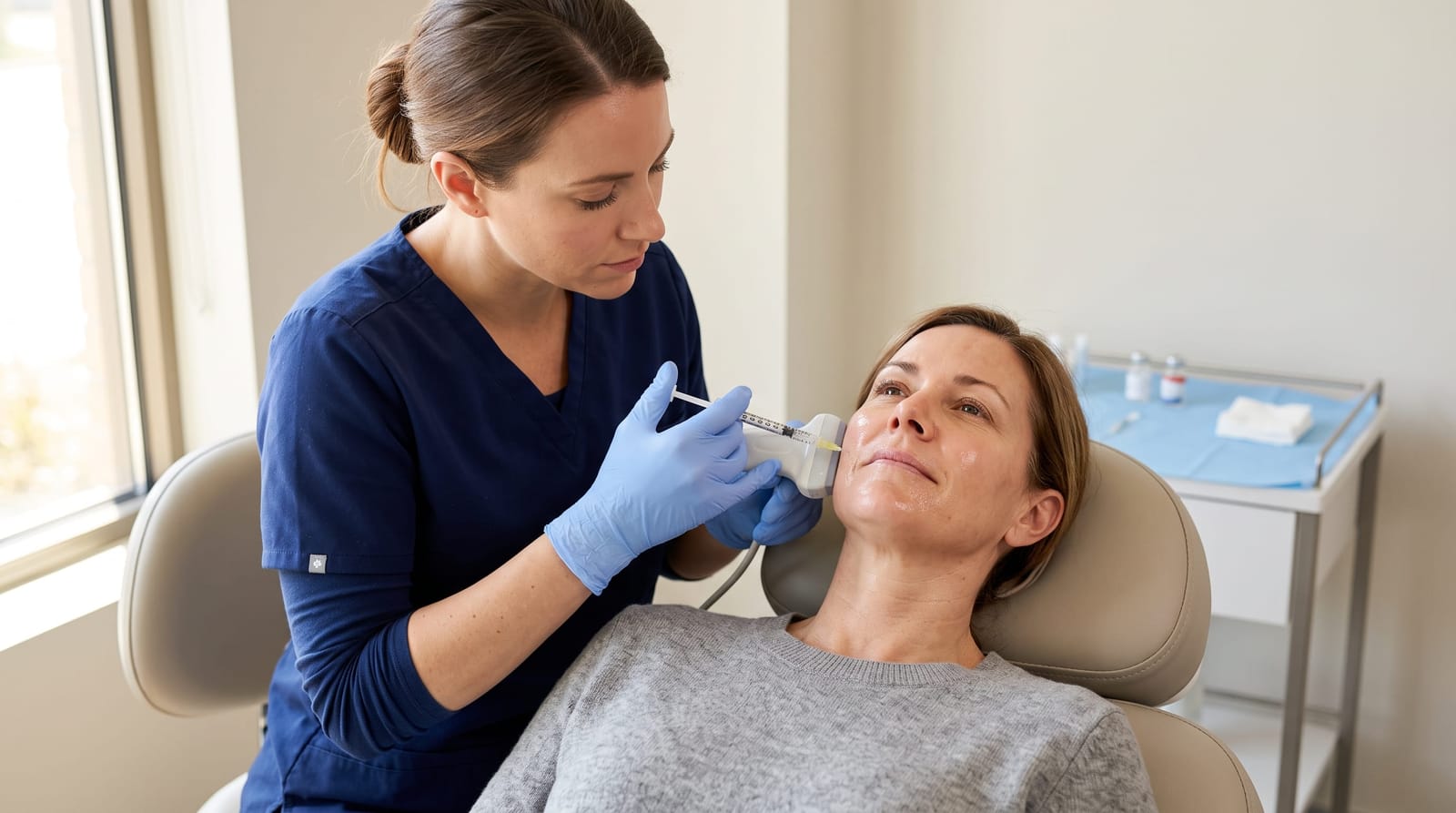
Exosome Therapy for Joint Repair: Regenerating Cartilage Without Surgery

Exosomes are biological messengers, not replacement cartilage. Their role in cell communication does not, by itself, demonstrate that an exosome-based product can restore a joint or replace surgery. For people exploring nonsurgical options, the important questions are what is causing the symptoms, what evidence supports a specific approach, and how benefit would be measured.
Understanding exosome biology can help make these conversations clearer. It also helps separate an explanation of a biological mechanism from a claim about pain relief, improved movement, or structural changes in cartilage.
Why Cartilage Repair Is a Difficult Problem
Articular cartilage covers the ends of bones inside a joint. Its smooth surface helps the bones move against each other and distributes forces during everyday activities. Unlike many other tissues, it has no direct blood supply and has a limited capacity for repair.
Joint symptoms, however, are not simply a measure of cartilage damage. Osteoarthritis involves the whole joint, including changes in bone and the joint lining. Tendons, ligaments, and other surrounding structures can also contribute to discomfort or difficulty moving.
This distinction matters when discussing chronic musculoskeletal symptoms. Less pain, better function, and restored cartilage are different outcomes. Improvement in one does not automatically demonstrate improvement in the others.
What Exosomes Do, and What Their Biology Can Explain
Exosomes are a type of extracellular vesicle, small membrane-bound particles released by cells. They can carry proteins, lipids, and genetic material, including microRNA. This cargo can influence how recipient cells behave through cell-to-cell communication.
In joint biology, relevant questions include how these signals interact with inflammation, cartilage-maintaining cells called chondrocytes, and the joint lining. These mechanisms help explain scientific interest in exosomes. They do not provide a shortcut from an effect observed in cells to a predictable medical outcome in people.
When evaluating a claim about joint repair, several distinctions are useful:
- Cell or animal findings versus human outcomes: An effect in a laboratory model does not show how a person will respond.
- Symptoms versus structure: A change in a pain score is not the same as evidence of cartilage restoration.
- One product versus another: Findings about a particular preparation cannot automatically be applied to every product described as containing exosomes.
- Short-term change versus lasting benefit: Follow-up duration matters when judging whether an outcome is meaningful.
Exosomes, Stem Cells, and Peptides Are Different Categories
Stem cells are cells. Exosomes are particles released by cells, not cells themselves. Peptides are short chains of amino acids. Although these terms often appear together in discussions of cellular health, they describe different biological materials.
Our explanation of the differences between exosomes and stem cells explores that distinction further. A shared connection to cellular signaling does not make these categories interchangeable or give them the same clinical uses.
“Cell-free” also does not mean “risk-free.” Product contents, processing, handling, and intended use matter when evaluating quality and potential risks. A quality-testing report and evidence of patient benefit answer different questions.
Why the Affected Joint and Tissue Matter
Knee, hip, and shoulder symptoms can involve different structures, even when the discomfort feels centered in a joint. Identifying the relevant structure helps define which evidence and care options are applicable.
- Knee: Articular cartilage, the menisci, ligaments, and surrounding tendons have different roles. A claim about one tissue does not necessarily apply to another.
- Hip: The joint surface, labrum, and nearby tendons or bursae can be relevant to an evaluation. The location of discomfort alone does not identify its cause.
- Shoulder: Rotator cuff tendons and the joint surface are distinct structures. Tendon-related limitations and joint-surface changes call for different clinical reasoning.
When reading knee-focused discussions of exosomes, the useful comparison is whether the people, joint problem, product, and measured outcome match the claim being made. Findings involving the knee also do not automatically apply to the hip, shoulder, or smaller joints.
Where Shockwave and Other Nonsurgical Options Fit
We offer shockwave therapy, which uses acoustic pressure waves rather than cell-derived vesicles. It is a separate modality with a different mechanism. Offering two approaches does not, by itself, demonstrate that combining them produces an added benefit.
For any proposed combination, the important questions are what each component is intended to address, what evidence supports using them together, and how their contributions would be evaluated. A biological explanation for a combination is different from a demonstrated clinical advantage.
Depending on the diagnosis, conventional joint care can include physical therapy, activity adjustments, symptom-management strategies, or an orthopedic evaluation. Nonsurgical care and surgery serve different purposes. Avoiding an operation is a preference to discuss, not evidence that another approach can address the same structural problem.
What an Individual Consultation Can Clarify
At Chara Health USA in Chatsworth, Dr. Joy Kong provides educational insights and personalized consultations focused on cellular health and longevity. This article provides general education; decisions about your own joint symptoms and medical options need an individual medical assessment with our team.
A useful discussion begins with a specific goal. Walking more comfortably, climbing stairs, or returning to a particular activity gives the conversation more direction than a broad aim such as “joint rejuvenation.” These functional goals are also distinct from broader cellular health and longevity goals.
When reviewing information about exosome-based services, questions that support an informed decision include:
- What findings explain the symptoms, and which tissue is the focus of the discussion?
- What is the exact product and intended use, and what regulatory status applies to that use?
- What human evidence supports the proposed outcome, rather than the mechanism alone?
- What potential risks, alternatives, and tradeoffs are relevant?
- How would pain, function, and any structural findings be assessed separately?
- What would prompt reassessment or a change in the care plan?
Recovery Expectations Belong to the Specific Procedure
The word “exosome” does not define a procedure, an activity restriction, or a recovery schedule. Those practical details depend on what is proposed, how it would be delivered, the joint problem, and the person's medical circumstances.
A discussion before any procedure can address expected discomfort, potential adverse effects, activity restrictions, follow-up, and whom to contact with concerns. A timetable for symptom monitoring is also different from evidence of structural change in cartilage.
Clear expectations connect the proposed approach to a measurable goal and a plan for reassessment. That is more useful for joint-health decisions than a promise of cartilage repair or a fixed date for improvement.