Laser Hair Removal for Dark or Olive Skin Tones: Is It Safe?
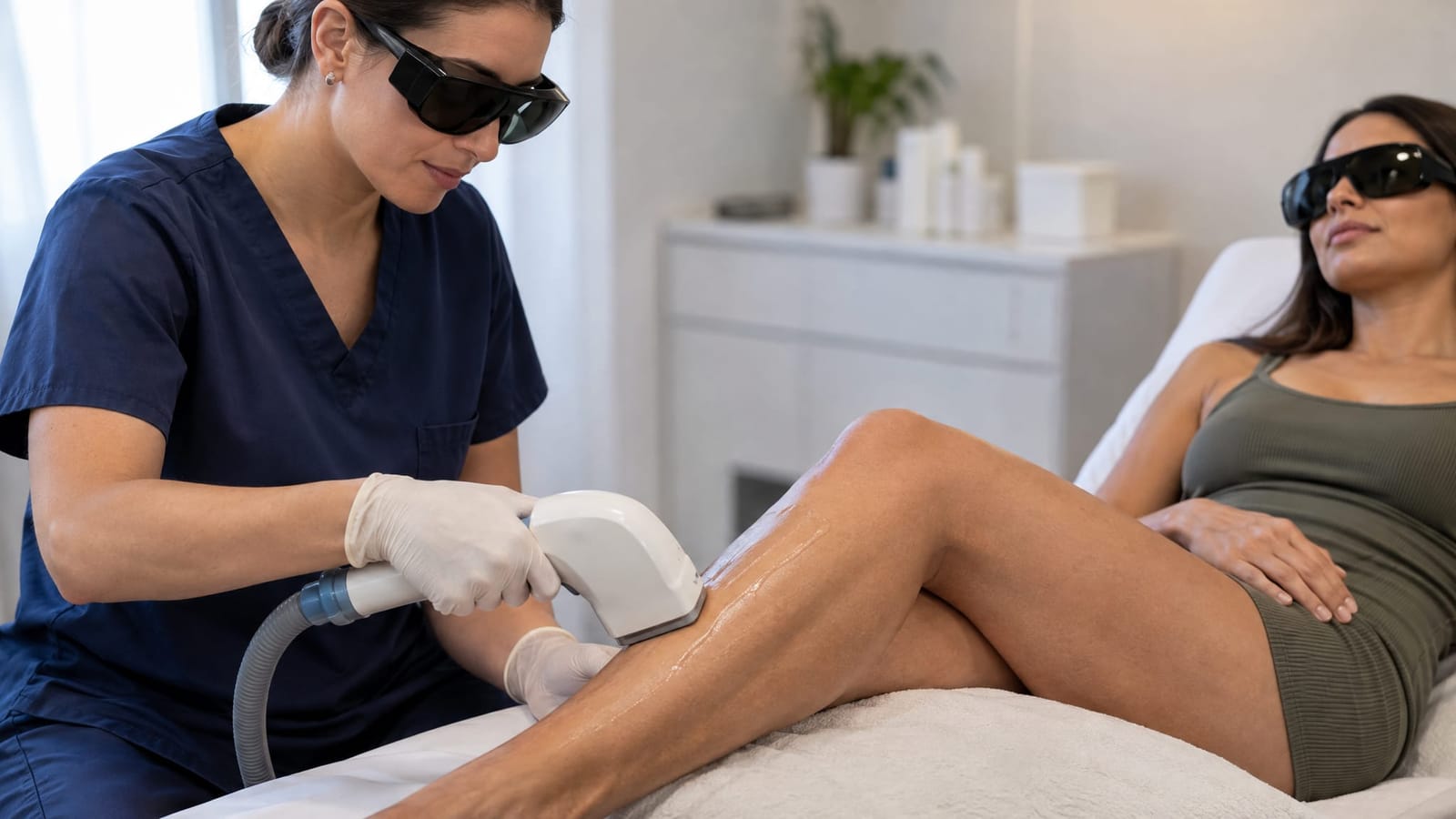
Laser hair removal can be suitable for people with dark or olive skin, but safety depends on more than skin tone. The laser technology, treatment settings, recent sun exposure, and the clinician’s assessment all matter. Burns and changes in pigmentation remain possible, even with careful planning.
It also helps to separate laser technology from cellular science. Stem cells, peptides, and exosomes describe biological concepts, not hair-removal devices. Understanding that distinction makes it easier to evaluate safety information without confusing wellness language with the precautions a laser procedure requires.
Start With How Skin Pigment Affects Laser Hair Removal
Laser hair removal uses light absorbed by melanin, the pigment in hair. That absorbed energy becomes heat, which targets structures involved in hair growth. Melanin is also present in the surrounding skin, so the challenge is directing enough energy toward the hair while limiting unwanted heating of the skin.
With darker skin, more pigment in the skin can compete for that energy. Olive skin also needs careful assessment, particularly after tanning. A complexion that appears relatively light does not automatically make every device or setting appropriate.
Two potential complications are hyperpigmentation, which means darker patches, and hypopigmentation, which means lighter patches. These are different from the brief redness or irritation that can follow a procedure.
Understand the Technology Before the Marketing Language
A laser’s wavelength affects how its energy interacts with pigment. Long-pulsed Nd:YAG lasers are commonly considered for darker skin because their longer wavelength is absorbed less strongly by surface melanin than shorter-wavelength hair-removal lasers.
That distinction is useful, but a device name alone is not a safety assessment. Pulse duration, energy settings, cooling, hair characteristics, and the area being addressed also influence the skin’s response.
For example, two people with similar olive complexions may need different planning if one has recently tanned or has a history of dark marks after minor irritation. Matching a device to a broad skin-color category misses those differences.
A meaningful explanation therefore goes beyond “suitable for all skin types.” It explains why a particular technology and approach fit the person’s current skin condition.
Keep Stem Cells, Peptides, and Exosomes Separate From Laser Safety
Regenerative medicine explores biological processes involved in cellular function and communication. Laser hair removal relies on light and heat. These are distinct subjects, and information about one does not replace an assessment of the other.
Stem Cells: A Cell Type, Not a Laser Specification
Stem cells have the capacity for self-renewal and, depending on their type, development into specialized cells. Their biological characteristics differ from the physical properties of a laser.
When stem cells appear in a wellness discussion, the useful distinction is whether the conversation concerns cellular biology or a light-based procedure. A reference to cells does not explain a device’s wavelength, its cooling system, or how settings are selected for pigmented skin.
Peptides: A Broad Category With Different Functions
Peptides are short chains of amino acids. Different peptides have different biological roles, so the category is not a single, interchangeable approach.
Questions about a peptide product involve its identity, formulation, intended use, and medical context. Questions about laser safety involve light absorption, heat, skin response, and device operation. Keeping those discussions separate helps prevent a broad wellness claim from being mistaken for a laser precaution.
Exosomes: Cellular Communication, Not Light-Based Technology
Exosomes are a type of extracellular vesicle released by cells and involved in cell-to-cell communication. They are not lasers or a form of skin cooling.
A description of cellular signaling answers a different question from how a device limits unwanted heating of pigmented skin. The term “exosome” therefore does not identify which hair-removal technology is appropriate or how pigmentation risks are managed.
At Chara Health USA in Chatsworth, Dr. Joy Kong provides educational insights and personalized consultations focused on cellular health and longevity, including stem cells, peptides, and extracellular vesicles. Questions about how these approaches relate to your medical history require individualized medical review with Dr. Kong, rather than decisions based on a general article.
What a Laser-Specific Safety Assessment Covers
For dark or olive skin, a useful assessment connects the proposed technology to the person’s skin and hair characteristics. The following topics help distinguish a detailed explanation from a general reassurance:
- Skin response history: Previous dark marks after irritation, burns, or reactions to light-based procedures provide relevant context.
- Current pigmentation: Recent tanning matters alongside natural skin tone. Timing may need reconsideration when the skin’s pigmentation has changed.
- Hair characteristics: Color and thickness affect how hair absorbs light. Skin tone alone does not describe the entire situation.
- Medications and skin products: These belong in the assessment because some affect sensitivity or contribute to irritation.
- Device selection and settings: The explanation can identify the laser type, the reason for selecting it, and how cooling fits into the approach.
- Small-area testing: A test spot provides information about a limited area’s response, but it cannot guarantee how every area or later session will respond.
- Preparation and aftercare: Sun protection and avoiding additional irritation are relevant to managing pigmentation risk.
These precautions are intended to reduce risk, not promise that discoloration cannot occur. They remain important regardless of whether a practice also discusses cellular health or other wellness approaches.
Frequently Asked Questions
Is IPL the same as a laser?
No. Intense pulsed light, or IPL, uses a range of light wavelengths rather than the specific wavelength produced by a laser. The terms are not interchangeable. An explanation of the actual device is more useful than the general phrase “light-based hair removal.”
Does darker skin always mean darker or thicker hair?
No. Skin pigmentation and hair characteristics are separate considerations. Someone with dark skin can have fine or lightly pigmented hair. Because laser hair removal relies on pigment in the hair, a skin assessment also needs to account for the hair itself.
Does “natural” or “regenerative” mean a procedure has less risk?
No. Those words do not describe a complete risk profile. A meaningful safety discussion identifies the specific procedure or product, its intended purpose, and the individual factors that affect suitability.
The Key Distinction
Dark or olive skin does not automatically rule out laser hair removal. The decision rests on skin-specific assessment and appropriate technology, not a universal safety label. Stem cells, peptides, and exosomes belong to a separate biological discussion and are not substitutes for laser-specific precautions.