Does Laser Light Therapy Really Work for Hair Loss? Reviewing the Evidence
If you've been researching hair restoration, you've almost certainly asked this question directly: does laser light therapy work for hair loss? It's a fair and important question: one that deserves a straight, evidence-based answer rather than vague reassurance or marketing language. The honest answer is yes. Laser light therapy does work for hair loss in specific, well-defined contexts, and the clinical research supporting that conclusion is more robust than most people realize. This review covers what the science actually shows, which variables determine success, and how laser therapy fits into a modern regenerative hair restoration strategy like the one offered at Chara Health USA.
Does Laser Light Therapy Work for Hair Loss? Understanding the Science First
Low-level laser therapy, commonly abbreviated as LLLT, uses specific wavelengths of red or near-infrared light to interact with hair follicle cells at a mitochondrial level. This biological process, called photobiomodulation, stimulates cellular energy production in the form of adenosine triphosphate (ATP). It also improves local blood circulation in the scalp, reduces follicular inflammation, and shifts hair follicles from a resting phase (telogen) back into an active growth phase (anagen). When people ask whether laser light therapy works for hair loss, understanding this mechanism is the critical first step.
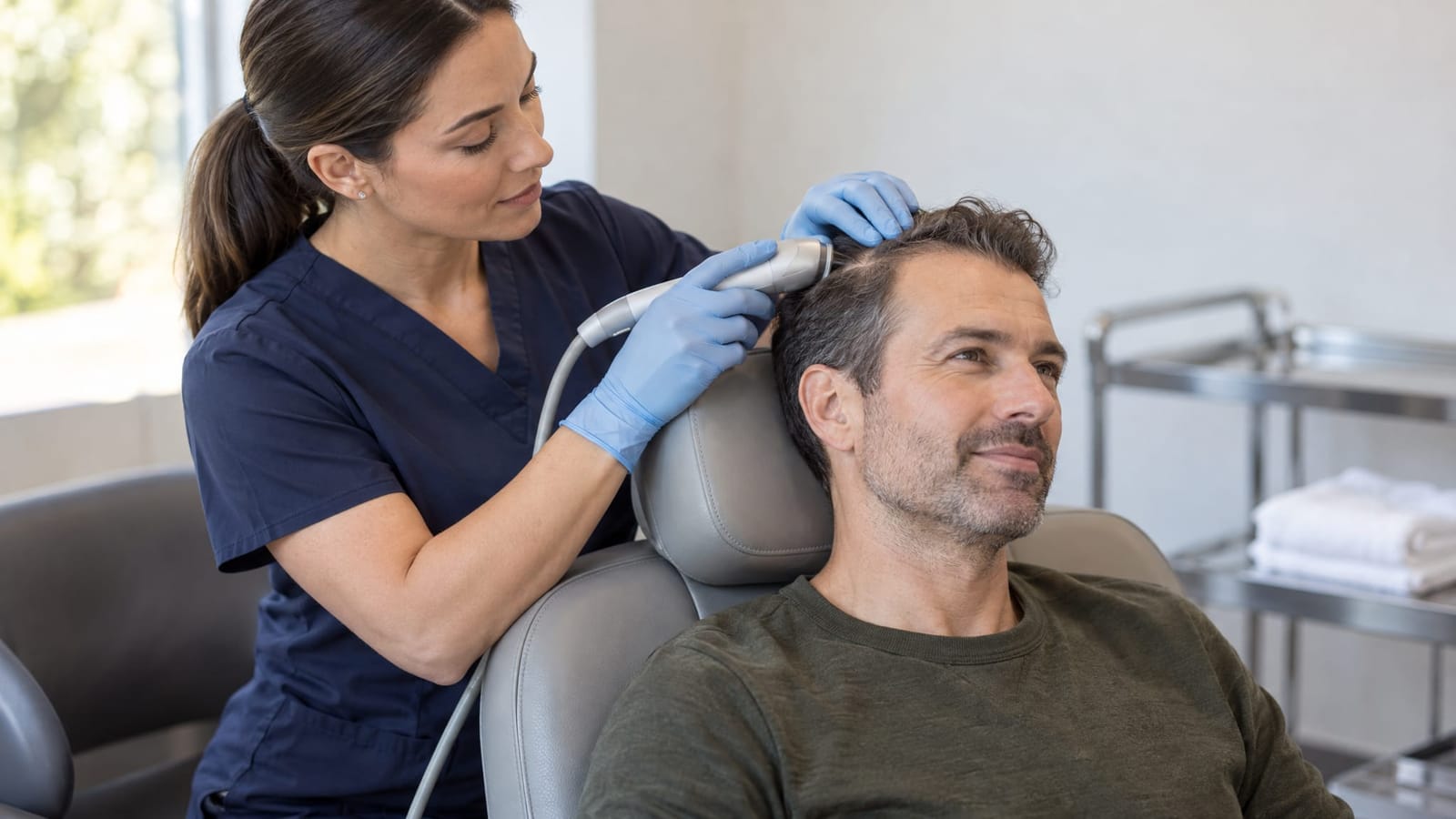
It's worth being clear about what LLLT is not. It is entirely distinct from the high-powered lasers used in surgical or ablative procedures. The light energy used in LLLT is non-thermal and non-ablative: it does not heat, cut, or damage tissue in any way. Devices range from professionally calibrated in-office laser caps and helmets to FDA-cleared handheld combs designed for regular home use.
In 2007, the FDA cleared an LLLT laser comb device as a safe treatment for male pattern hair loss. In 2011, that clearance was formally extended to include female pattern hair loss. FDA clearance for safety is not identical to FDA approval for efficacy, but it represents a meaningful regulatory threshold. It distinguishes legitimate LLLT devices from the many unvalidated products crowding the marketplace. At Chara Health USA, only devices meeting validated safety and efficacy standards are incorporated into patient protocols.
Does Laser Light Therapy Work for Hair Loss? What the Clinical Studies Show
The clinical evidence for LLLT in hair loss has grown substantially over the past fifteen years. Several well-designed randomized controlled trials, the gold standard in clinical research, have produced statistically significant findings. Understanding this research is essential for anyone genuinely evaluating whether laser light therapy works for their specific hair loss situation.
A randomized controlled trial published in the American Journal of Clinical Dermatology in 2014 found significant improvements in hair density and hair thickness in participants using LLLT compared to a sham device control group. These were objective, measurable outcomes verified by clinical assessment, not self-reported impressions. A 2013 study published in Lasers in Surgery and Medicine reported a 39% increase in hair growth in men with androgenetic alopecia who used an LLLT helmet device over a 16-week period. That is a clinically significant number worth taking seriously.
Additional peer-reviewed studies have reported improvements in hair shaft diameter, terminal hair count, scalp coverage density, and tensile strength of existing hair. A 2017 systematic review and meta-analysis published in the Journal of the American Academy of Dermatology examined multiple controlled trials and concluded that LLLT was effective for promoting hair growth in both men and women with androgenetic alopecia. When researchers pool multiple high-quality studies and arrive at consistent conclusions, that finding carries significant scientific weight.
It is important to approach these results with appropriate context. Most studies involve participants with androgenetic alopecia, by far the most common form of hair loss. Outcomes vary depending on the stage of hair loss at the time of treatment, total treatment duration, device specifications, and individual biology. LLLT appears most effective when follicles are weakened but still biologically viable. No honest clinician will promise identical results for every patient. What the overall body of evidence does clearly support, however, is that laser photobiomodulation produces a meaningful, reproducible effect on follicle biology that is distinct from placebo. So when patients ask whether laser light therapy works for hair loss, the science says: yes, under the right conditions.
Key Parameters That Determine Whether Laser Light Therapy Works for Hair Loss
Not all laser therapy is created equal. The effectiveness of LLLT is significantly shaped by several technical variables. Understanding these parameters is essential for evaluating any device, clinic, or protocol. It is also one reason why working with a clinically rigorous provider like Chara Health USA makes a practical difference in outcomes.
Wavelength: The Most Critical Variable
Wavelength determines which cellular structures the light energy interacts with. The most extensively studied and clinically effective wavelengths for hair follicle stimulation fall in the 630-670 nanometer (nm) red light range. Some research also supports near-infrared wavelengths in the 820-830 nm range, which penetrate deeper into tissue. Devices operating outside these validated ranges may produce inconsistent or negligible results: regardless of how they are marketed. When a patient asks whether laser light therapy works for hair loss, one of the first clarifying questions should always be: at what wavelength?
Energy Dosing and the Biphasic Dose Response
Photobiomodulation research has established an important concept called the biphasic dose response. Too little light energy may be insufficient to stimulate follicular activity. Too much may actually suppress it. This reflects a broader biological principle: optimal cellular stimulation requires a therapeutic window. Devices that allow precise energy delivery control are preferable to those with fixed, non-adjustable output. This is one area where in-office professional protocols have a clear advantage over many consumer-grade devices.
Treatment Frequency and Duration
Most clinical protocols involve sessions three times per week over a minimum of 16 to 26 weeks. Hair growth is a slow biological process governed by multi-week growth cycles, and there are no shortcuts that bypass this reality. Consistency over time is more important than session intensity alone. Patients who complete full treatment courses produce better outcomes than those who start and stop. This is a practical point worth taking seriously before beginning any program. If you are wondering whether laser light therapy works for hair loss, part of the answer depends on your commitment to the treatment schedule.
How to Evaluate Whether Laser Light Therapy Is Working for Your Hair Loss
One challenge patients face when using LLLT is knowing what to look for and when to look for it. Progress in hair restoration is gradual. The early signs of improvement are easy to miss, or to misinterpret as lack of progress. Knowing the typical timeline helps you stay informed and patient during the process.
- Reduced shedding (weeks 8-12): One of the earliest signs that LLLT is having a biological effect is a reduction in daily hair shedding. This reflects follicles transitioning out of the resting phase and is often the first measurable signal.
- Improved hair texture and thickness (weeks 8-16): Existing hairs may appear thicker, shinier, or more resilient before new growth becomes visible. Clinicians can document this through microscopic hair shaft analysis.
- New fine hairs at the hairline or crown (weeks 12-20): These vellus-like hairs represent follicles re-entering the growth cycle. They are a meaningful early indicator of treatment response and a direct answer to whether laser light therapy is working for hair loss in your case.
- Visible density changes (months 4-6): Measurable improvements in hair density and scalp coverage are typically documented at this point in most clinical studies. Photographic baseline documentation makes it possible to objectively compare results over time.
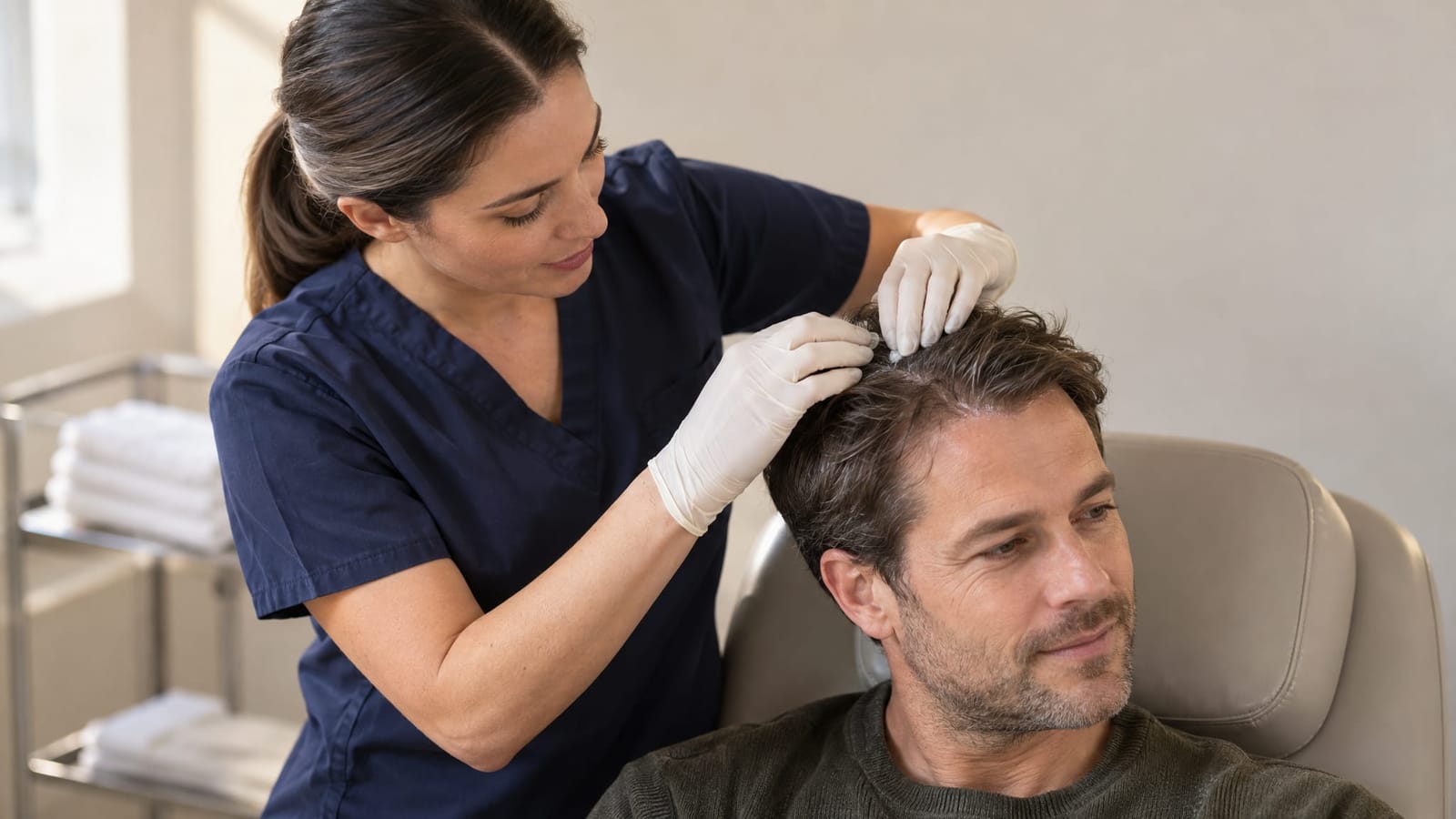
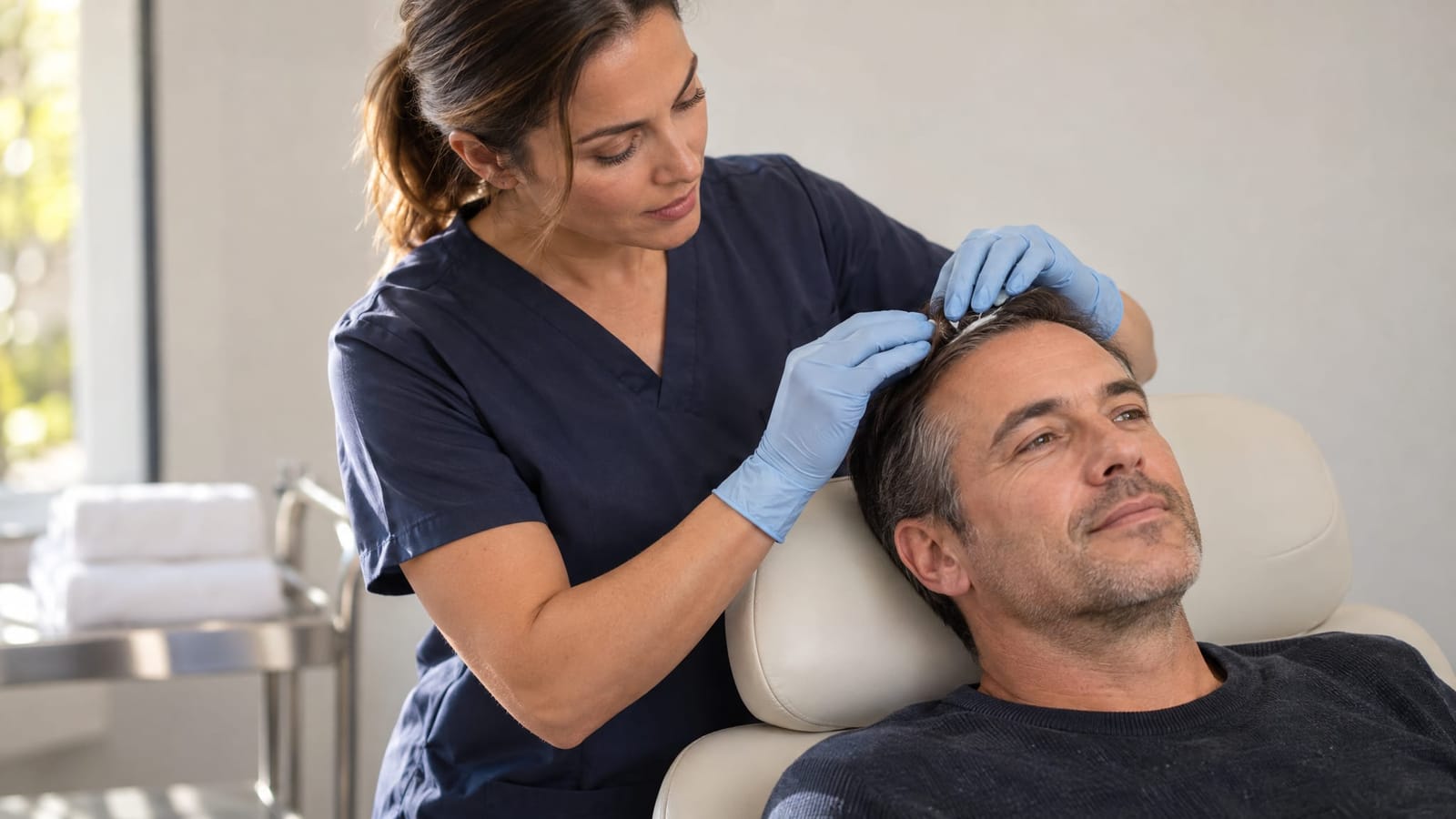
At Chara Health USA, patients undergo baseline clinical photography and hair density assessments before beginning any LLLT protocol. This allows for objective, documented tracking of progress rather than relying on subjective impression alone. This is an important standard of care for any evidence-based hair restoration program.
Does Laser Light Therapy Work for Hair Loss as a Standalone Treatment?
This is where the evaluation becomes particularly relevant for patients weighing their options. The clinical data says yes, with qualifications. The magnitude of improvement from LLLT used in isolation is typically moderate. This is especially true for patients who have experienced progressive hair loss over multiple years or who have already tried other approaches without satisfying results.
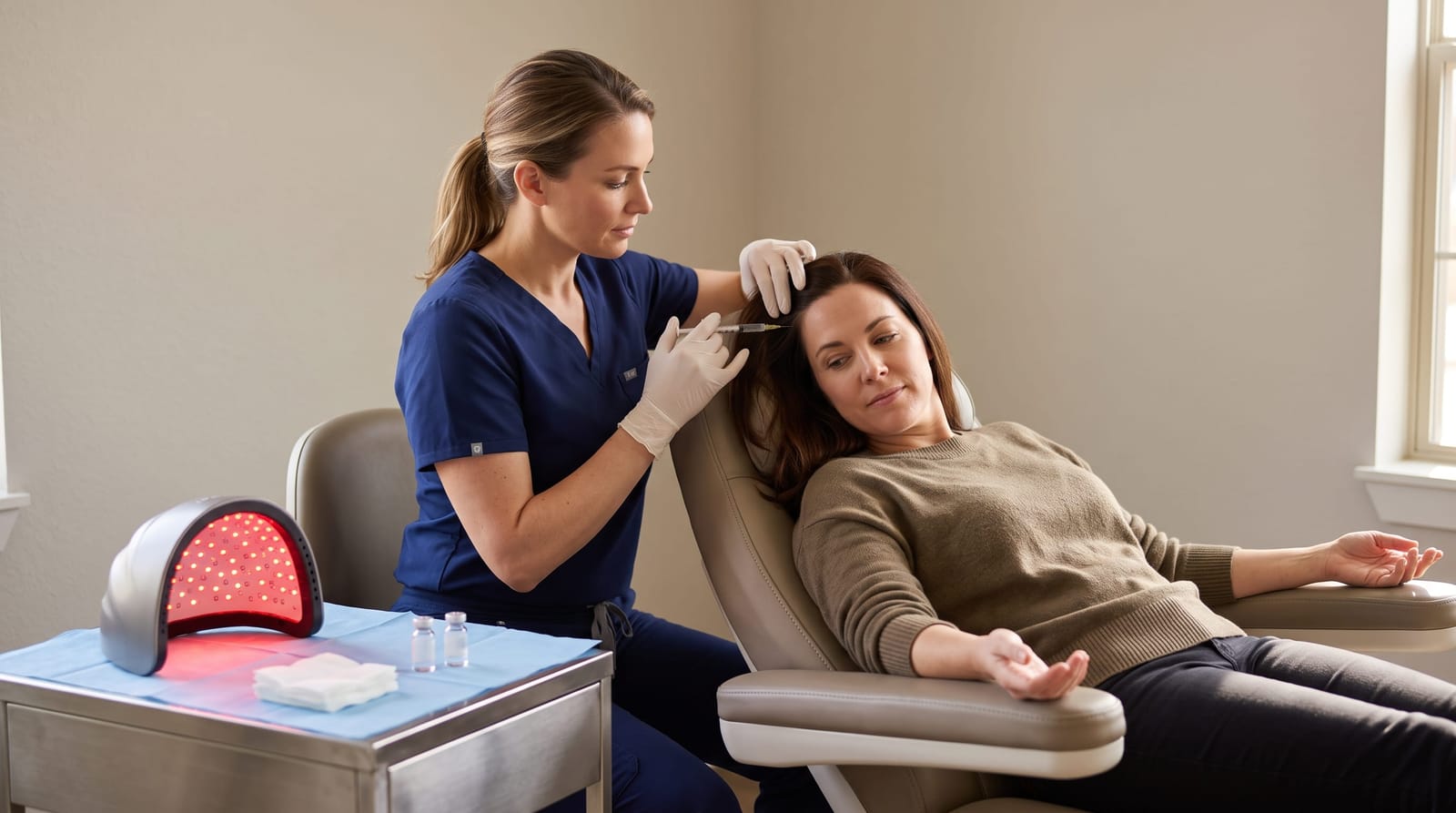
At Chara Health USA, LLLT is considered one important component within a broader regenerative hair restoration protocol rather than a complete solution in isolation. When combined with advanced therapies such as exosome treatments, peptide-based growth factor approaches, and precision nutritional support targeting follicle regeneration at a cellular level, laser photobiomodulation functions as a powerful supportive adjunct. It optimizes the tissue environment, improving blood flow, reducing inflammation, and enhancing cellular energy availability, so that regenerative signals delivered by other therapies can work more effectively.
Think of it as synergy rather than substitution. The combination addresses hair loss from multiple biological angles simultaneously rather than relying on a single mechanism of action. This multi-modal strategy is consistent with how Chara Health USA approaches regenerative medicine broadly: not as a collection of isolated treatments, but as an integrated system targeting the underlying biology of aging and cellular decline.
For patients earlier in their hair loss journey, or those seeking maintenance support between more intensive regenerative treatments, a structured LLLT program may offer meaningful standalone benefit. For those with more advanced thinning, a longer history of progression, or a prior record of unsatisfying results from single-modality approaches, a combination strategy is likely to produce more visible and durable outcomes. A qualified clinician at Chara Health USA can assess which approach is appropriate for your specific situation.
Does Laser Light Therapy Work for Hair Loss in Women as Well as Men?
This is one of the most common questions clinicians receive, and the answer is clearly yes. FDA clearance for LLLT explicitly extends to female pattern hair loss, and multiple clinical studies have included female participants with consistently positive outcomes. A 2014 randomized controlled trial published in Lasers in Surgery and Medicine found that women using an LLLT device experienced a statistically significant increase in hair count compared to the placebo group over 16 weeks.
Hair loss in women can involve a broader range of contributing factors than in men. These include hormonal fluctuations, postpartum changes, thyroid dysfunction, iron deficiency, and chronic stress. Each of these factors can influence how well laser light therapy works for hair loss in an individual patient. A thorough clinical evaluation is therefore especially important for female patients. At Chara Health USA, a sex-specific assessment is standard practice to ensure the treatment strategy addresses the full picture of each patient's hair health.
Women with androgenetic alopecia, which typically presents as diffuse thinning across the crown rather than a receding hairline, tend to respond particularly well to LLLT when treatment begins at an early to moderate stage. The broader pattern of follicular involvement in female hair loss means that a helmet or cap device offering uniform scalp coverage often produces more comprehensive results than a targeted handheld device.
Who Is the Best Candidate for Laser Light Therapy for Hair Loss?
Understanding candidacy is an important part of answering whether laser light therapy works for hair loss in your particular case. LLLT is not equally appropriate for every type of hair loss or every stage of progression. Being honest about this improves outcomes and avoids wasted time and resources.
Ideal Candidates for LLLT
- Men and women with androgenetic alopecia at early to moderate stages of progression
- Patients with diffuse thinning rather than complete follicular loss in affected areas
- Individuals seeking a non-pharmacological, non-surgical approach to hair maintenance or restoration
- Patients using LLLT as a complement to other regenerative hair therapies to enhance overall outcomes
- Those looking to maintain the results of more intensive treatments over the long term
- Health-conscious individuals who prefer biologically grounded treatments over pharmaceutical approaches with systemic side effects
When LLLT May Have Limited Effectiveness
- Areas where hair follicles have been completely inactive for an extended period, typically a decade or more, as there may be insufficient viable follicular tissue to stimulate
- Hair loss caused by active autoimmune conditions such as alopecia areata, without concurrent treatment of the underlying immune dysfunction
- Scarring alopecia, where fibrotic tissue has replaced follicular structures and the biological substrate for stimulation is no longer present
- Hair loss driven by unaddressed nutritional deficiencies, thyroid dysfunction, or hormonal imbalances, in these cases, resolving the root cause must be part of the treatment plan for laser light therapy to work effectively for hair loss
This candidacy framework reflects the clinical approach used at Chara Health USA, where every patient evaluation begins with a thorough assessment of the underlying drivers of hair loss before any treatment protocol is recommended. Laser light therapy works for hair loss most reliably when it is applied to the right patients, at the right stage, with the right parameters.
Comparing LLLT to Other Hair Loss Treatments: Where Does It Fit?
Patients evaluating whether laser light therapy works for hair loss often want to know how it compares to other available treatments. A clear-eyed comparison helps set realistic expectations and supports better decision-making.
Minoxidil, available over the counter, is one of the most widely used hair loss treatments. It works by prolonging the anagen (growth) phase and increasing scalp blood flow. Clinical studies suggest LLLT produces comparable or superior outcomes to minoxidil in some patient populations, with the additional advantage of having no systemic side effects. A 2014 split-scalp study found LLLT performed comparably to 5% minoxidil in promoting hair regrowth, making it a credible alternative for patients who cannot tolerate or prefer to avoid pharmaceutical treatment.
Finasteride, an oral DHT-blocking medication used in men, carries a known profile of potential systemic side effects including sexual dysfunction and mood changes. Many patients in the health-conscious, proactive demographic that Chara Health USA serves are specifically looking for effective non-pharmaceutical options. Laser light therapy offers a biologically grounded answer to the question of whether there is a drug-free approach that actually works for hair loss, and the answer, supported by clinical evidence, is yes.
Platelet-rich plasma (PRP) therapy involves injecting concentrated growth factors from the patient's own blood into the scalp. Clinical data supports its effectiveness for androgenetic alopecia, and it works well in combination with LLLT. In fact, several studies suggest that pre-treating the scalp with LLLT before PRP injections may enhance tissue uptake and improve overall outcomes. At Chara Health USA, LLLT is used strategically within combination protocols precisely because of this kind of documented synergy.
Frequently Asked Questions: Does Laser Light Therapy Work for Hair Loss?
How long does it take to see results from laser light therapy for hair loss?
Most clinical studies tracking LLLT outcomes run 16 to 26 weeks. That timeline aligns with the natural biology of the hair growth cycle. Meaningful changes in hair density or thickness typically become visible after 3 to 6 months of consistent treatment. Early indicators such as reduced shedding or improved hair texture may appear sooner, often between weeks 8 and 12. Results before the 3-month mark are typically subtle. This is why adherence to the recommended treatment frequency is critical. Patients who abandon treatment at the 6 to 8 week mark, before visible results appear, frequently conclude that laser light therapy does not work for hair loss when the issue was simply insufficient duration.
Is laser light therapy safe for all hair loss types?
The strongest clinical evidence for whether laser light therapy works for hair loss applies specifically to androgenetic alopecia in both men and women. Evidence for other forms of hair loss, such as alopecia areata or telogen effluvium, is more limited and context-dependent. A thorough clinical evaluation is essential before beginning any treatment program. The underlying cause of hair loss significantly influences which therapeutic approaches are most appropriate. At Chara Health USA, no treatment protocol is initiated without a comprehensive intake evaluation that maps the specific drivers of each patient's hair loss.
Can I use an at-home LLLT device instead of in-office treatment?
Several FDA-cleared at-home devices have been studied in randomized controlled trials and have produced genuine clinical results. In-office devices generally offer more precise dosing parameters, broader and more uniform scalp coverage, and professional oversight, all of which matter for optimizing outcomes. That said, consistent and compliant use of a high-quality, clinically validated at-home device can produce real, meaningful results. The key variables in both settings are wavelength, energy dosing, and treatment consistency. Discussing both in-office and at-home options with a clinician at Chara Health USA can help you determine what is practical and appropriate for your goals, lifestyle, and budget.
Does laser light therapy work for hair loss at the hairline?
This depends significantly on the degree of follicular activity remaining at the hairline. In patients with early to moderate recession where follicles are thinning but still viable, LLLT has produced documented improvements in hairline density. In areas of long-standing, complete follicular loss, the biological substrate necessary for LLLT to stimulate may no longer be present, and results will be limited. A clinical scalp assessment, ideally with trichoscopy or digital hair density analysis, can determine follicular viability and help set realistic expectations about whether laser light therapy will work effectively for hair loss in that specific area.
Does laser light therapy work for hair loss caused by stress or nutritional deficiency?
Hair loss caused by telogen effluvium, often triggered by physical stress, psychological stress, illness, or nutritional deficiency, is a different biological condition than androgenetic alopecia. LLLT may support recovery by improving scalp circulation and reducing follicular inflammation, but it will not correct the underlying deficiency or stressor driving the hair loss. In these cases, resolving the root cause is the primary intervention. LLLT may serve a supportive role, but it should not be the first-line answer. At Chara Health USA, a comprehensive intake process identifies these contributing factors so the treatment plan addresses the full picture.
The Chara Health USA Approach to Laser Light Therapy and Hair Restoration
At Chara Health USA, the question of whether laser light therapy works for hair loss is answered not in isolation but within the context of each patient's complete health profile, hair loss history, and long-term restoration goals. The practice's orientation toward regenerative medicine means that hair restoration is approached as a biological problem requiring a systems-level solution, not as a cosmetic issue to be addressed with a single product or procedure.
The clinical team at Chara Health USA integrates LLLT within individualized protocols that may also incorporate exosome therapy, growth factor treatments, precision supplementation, and hormonal optimization where appropriate. Every patient receives baseline documentation, structured follow-up assessments, and ongoing clinical guidance throughout their treatment course. This level of clinical structure is what distinguishes a medically supervised regenerative hair program from purchasing a laser device and hoping for the best.
Chara Health USA serves patients who are health-conscious, proactive about their long-term wellbeing, and looking for treatments grounded in real science rather than wellness trends. These are individuals who understand that meaningful results require a well-designed protocol, expert clinical oversight, and consistent follow-through. For this patient profile, the integrated regenerative approach at Chara Health USA represents the standard of care that delivers the most reliable and durable outcomes when evaluating whether laser light therapy, or any hair restoration therapy, truly works.
The Bottom Line: Does Laser Light Therapy Work for Hair Loss?
Yes: laser light therapy does work for hair loss, and the evidence supporting that conclusion is clinically documented, reproducible, and more substantial than most patients expect when they first begin researching their options. Specific wavelengths, validated energy dosing, consistent application over several months, and appropriate patient selection are the variables that determine whether results are meaningful. As a standalone option, LLLT offers moderate but genuine benefit: particularly for patients in the earlier stages of hair loss who are committed to the recommended treatment schedule.
As part of a comprehensive regenerative hair restoration strategy, the kind of individualized, multi-modality approach that defines the clinical model at Chara Health USA, laser light therapy serves as a valuable and well-supported component of a larger protocol designed to address hair loss at its biological root. The research is clear: when the right patients receive the right protocol with the right clinical oversight, laser light therapy works for hair loss in a way that is measurable, meaningful, and durable.
If you are seriously evaluating whether laser light therapy will work for your specific hair loss situation, the most important next step is a consultation with a qualified clinician who can assess your individual drivers of hair loss, evaluate follicular viability, and match you with a strategy designed to produce real results. The team at Chara Health USA is equipped to do exactly that. Book your consultation today and take the first step toward a hair restoration plan built on science, not guesswork.